
Introduction
Most gardeners prune with one simple goal in mind:
“Help the plant grow better.”
But here’s the problem — not all pruning is meant to encourage growth.
In fact, there are two completely different pruning strategies, and confusing them is one of the biggest reasons plants become overgrown, unbalanced, or difficult to maintain.
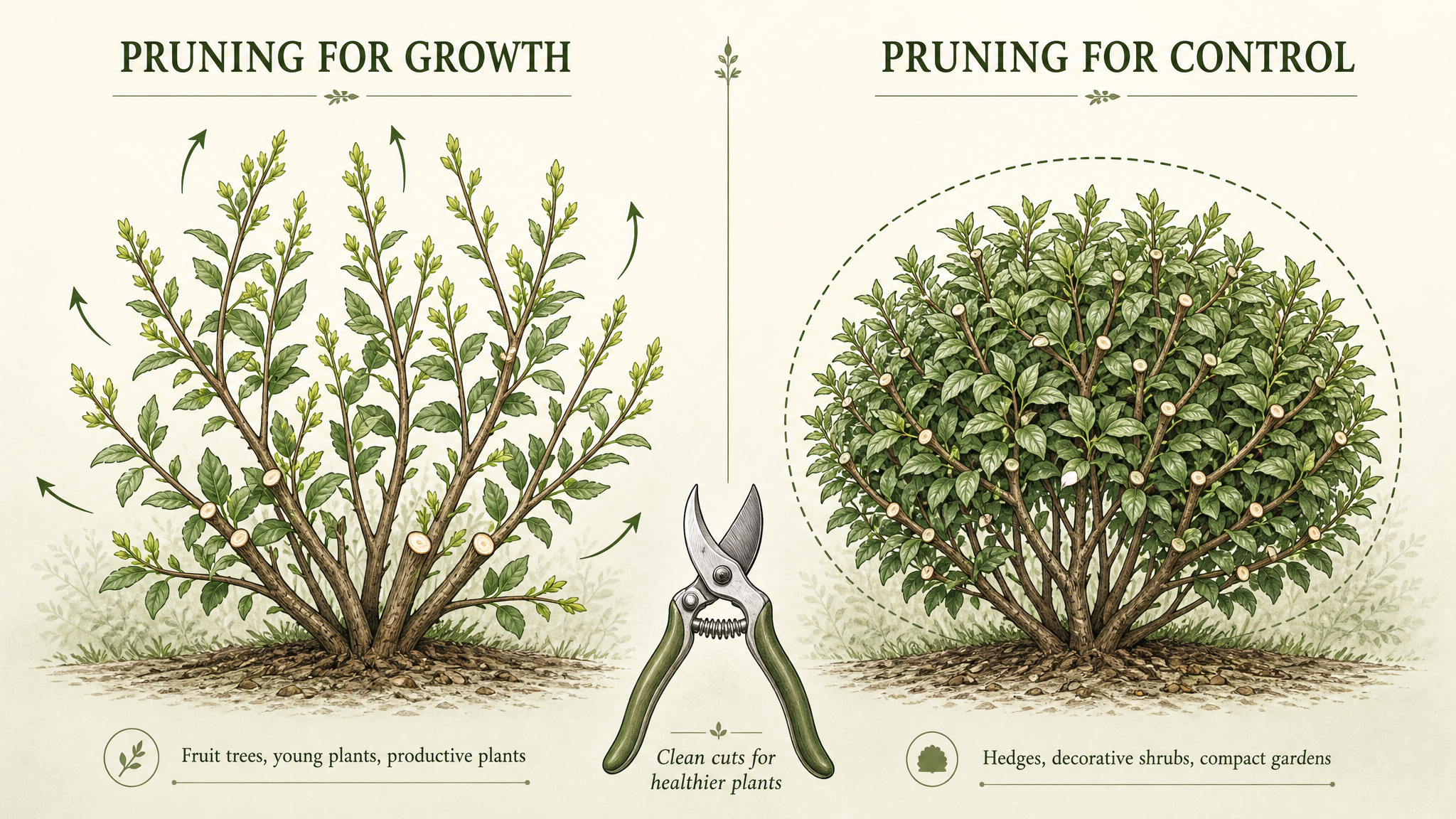
Professional gardeners understand the difference between:
- Pruning for Growth
- Pruning for Control
Knowing which strategy to use can completely change how your plants develop over time.
What Is Pruning for Growth?
Growth pruning is designed to stimulate stronger, faster, and healthier development.
This method is commonly used for:
- Fruit trees
- Young trees
- Productive plants
- Plants recovering from damage
The main goal is to redirect the plant’s energy into healthier and more productive growth.
Signs You Should Prune for Growth
You should focus on growth pruning when your plant:
- Has weak or crowded branches
- Produces fewer flowers or fruits
- Needs better airflow and sunlight
- Is still developing its main structure
Common Growth Pruning Techniques
1. Removing Competing Branches
Too many competing limbs force the plant to divide energy inefficiently.
By removing weaker branches, the plant can focus resources on stronger growth.
2. Opening the Center Structure
For many fruit trees, opening the canopy improves:
- Air circulation
- Sunlight penetration
- Fruit production
This is especially important for apples, peaches, and citrus trees.
3. Cutting Back Older Growth
Strategic cuts encourage fresh shoots and new productive wood.
Done correctly, this can improve flowering and harvest quality significantly.
What Is Pruning for Control?
Control pruning has a completely different purpose.
Instead of encouraging aggressive growth, it focuses on:
- Maintaining size
- Preserving shape
- Managing space
- Reducing maintenance
This approach is commonly used for:
- Hedges
- Decorative shrubs
- Landscape plants
- Compact garden areas
Signs You Need Control Pruning
Your plant may need control pruning if:
- It grows too quickly
- Branches block walkways or windows
- The shape becomes uneven
- Maintenance becomes difficult
Common Control Pruning Techniques
1. Light Structural Trimming
Instead of removing large sections, small adjustments maintain the plant’s appearance over time.
2. Regular Maintenance Cuts
Frequent light pruning is usually better than occasional heavy pruning.
This helps prevent sudden stress and uncontrolled regrowth.
3. Shape Preservation
Decorative plants often require careful shaping rather than aggressive cutting.
The goal is balance—not rapid growth.
The Biggest Mistake Most Gardeners Make
Here’s where problems start:
❌ Many people use growth-pruning techniques when they actually want size control.
The result?
- Faster overgrowth
- Excessive new shoots
- More maintenance later
For example:
If you heavily prune a hedge trying to make it “smaller,” the plant often responds by growing back even more aggressively.
That’s because heavy cuts stimulate survival growth.
How to Choose the Right Pruning Strategy
Before making any cut, ask yourself these questions:
1. Do I want more growth or less?
If you want stronger production, use growth pruning.
If you want stability and shape, use control pruning.
2. Is this plant functional or decorative?
Fruit trees and productive plants benefit from stronger pruning.
Decorative shrubs usually need controlled maintenance.
3. How much maintenance can I handle?
Aggressive pruning often creates more future work.
Controlled maintenance creates more predictable growth.
Why Clean Cuts Matter in Both Strategies
No matter which pruning style you choose, clean cuts are essential.
Poor cuts can:
- Stress the plant
- Slow healing
- Increase disease risk
Sharp, precise cutting tools help create:
- Cleaner wounds
- Faster recovery
- More controlled results
This becomes especially important when pruning thicker branches or making repeated maintenance cuts.
👉 Explore professional pruning tools designed for cleaner, smoother cuts.
Final Thoughts
Pruning is not just about cutting branches—it’s about understanding your goal.
If you prune for growth when you actually need control, your plants may become harder to manage every season.
But when you match the right pruning strategy to the right plant, you create healthier growth, better structure, and easier long-term maintenance.
Related Topics
- How to Diagnose a Plant Before You Prune
- Why Clean Cuts Matter in Plant Health
- Common Pruning Mistakes That Damage Plants
Conclusion
The best gardeners don’t simply prune more—they prune with purpose.
Understanding the difference between growth pruning and control pruning is one of the most important steps toward healthier, better-managed plants.
Better pruning starts with better decisions — and better tools.
Choosing the right pruning strategy can help your plants stay healthier, stronger, and easier to manage season after season.