
Most gardeners think pruning is about removing branches.
In reality, every cut you make creates a wound—and how clean that wound is determines whether your plant thrives or struggles.
1. Plants Don’t Heal—They Seal
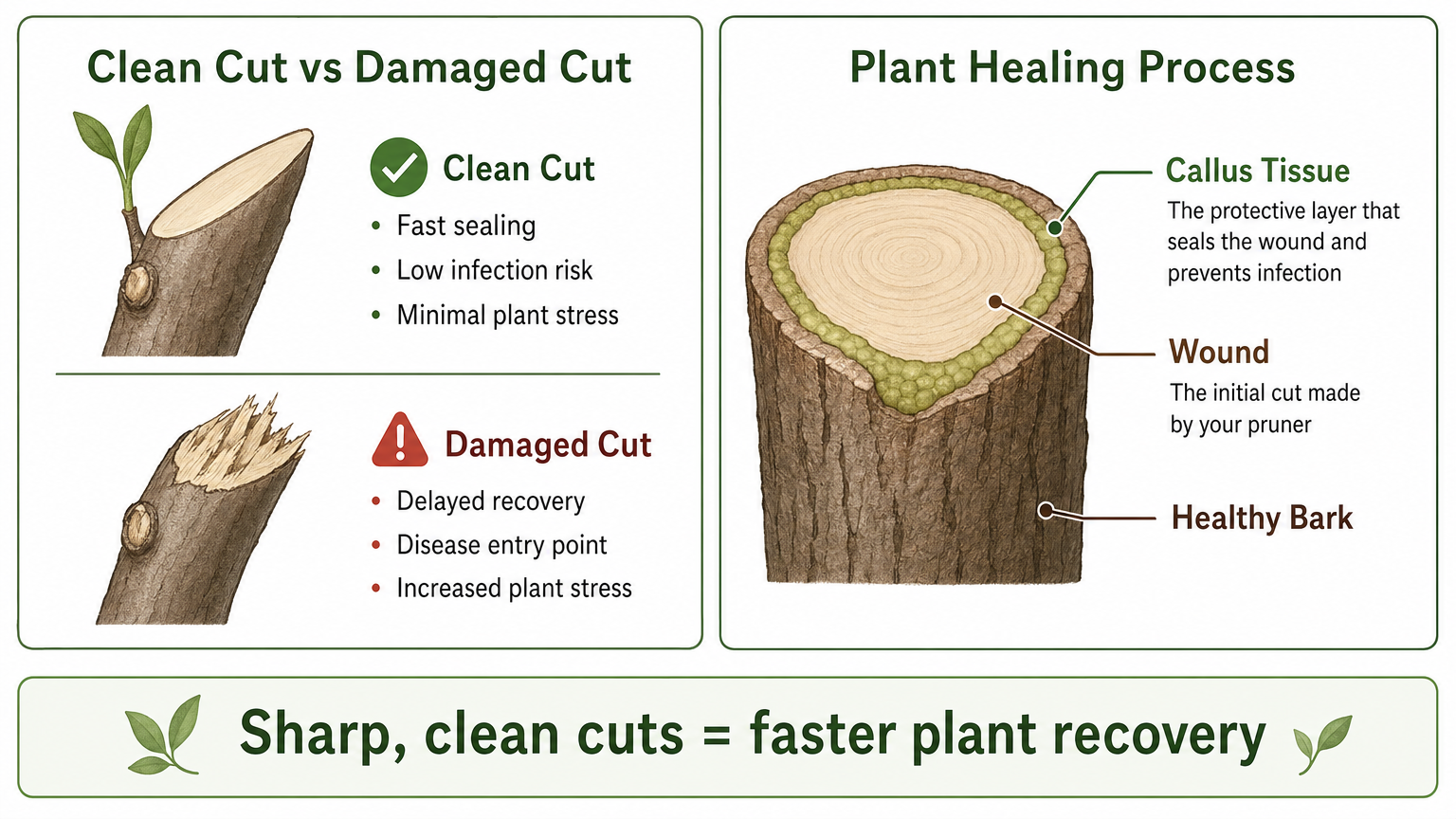
Unlike humans, plants don’t regenerate damaged tissue.
Instead, they form a protective layer called callus tissue.
👉 Clean cut = fast sealing
👉 Rough cut = delayed recovery + infection risk
2. The Difference Between a Clean Cut and a Damaged Cut
| Type | Result |
|---|---|
| Clean, sharp cut | Quick healing, minimal stress |
| Crushed or torn cut | Disease entry, slow recovery |
A dull blade doesn’t “cut”—it crushes plant cells.
3. Why Tool Quality Matters More Than You Think
Many pruning problems aren’t about technique—they’re about tools.
- Dull blades → jagged wounds
- Weak tools → repeated cutting
- Inconsistent pressure → uneven cuts
👉 This is where electric pruning tools make a difference:
- Consistent force
- Smooth cutting motion
- Cleaner results with less effort
Click here to explore Prunarbo electric pruners for consistently clean cuts
4. Practical Tips for Perfect Cuts
- Always use sharp blades
- Avoid cutting too far from the bud
- Make cuts in one motion whenever possible
- Don’t “chew” through thick branches
💡 Pro tip: A quality electric pruner makes all these tips effortless.
Conclusion
If your plants struggle after pruning, the issue may not be when or where you cut—but how cleanly you do it.
Ready to make every cut count? Shop Prunarbo electric pruning shears for cleaner cuts, healthier plants, and less effort.