
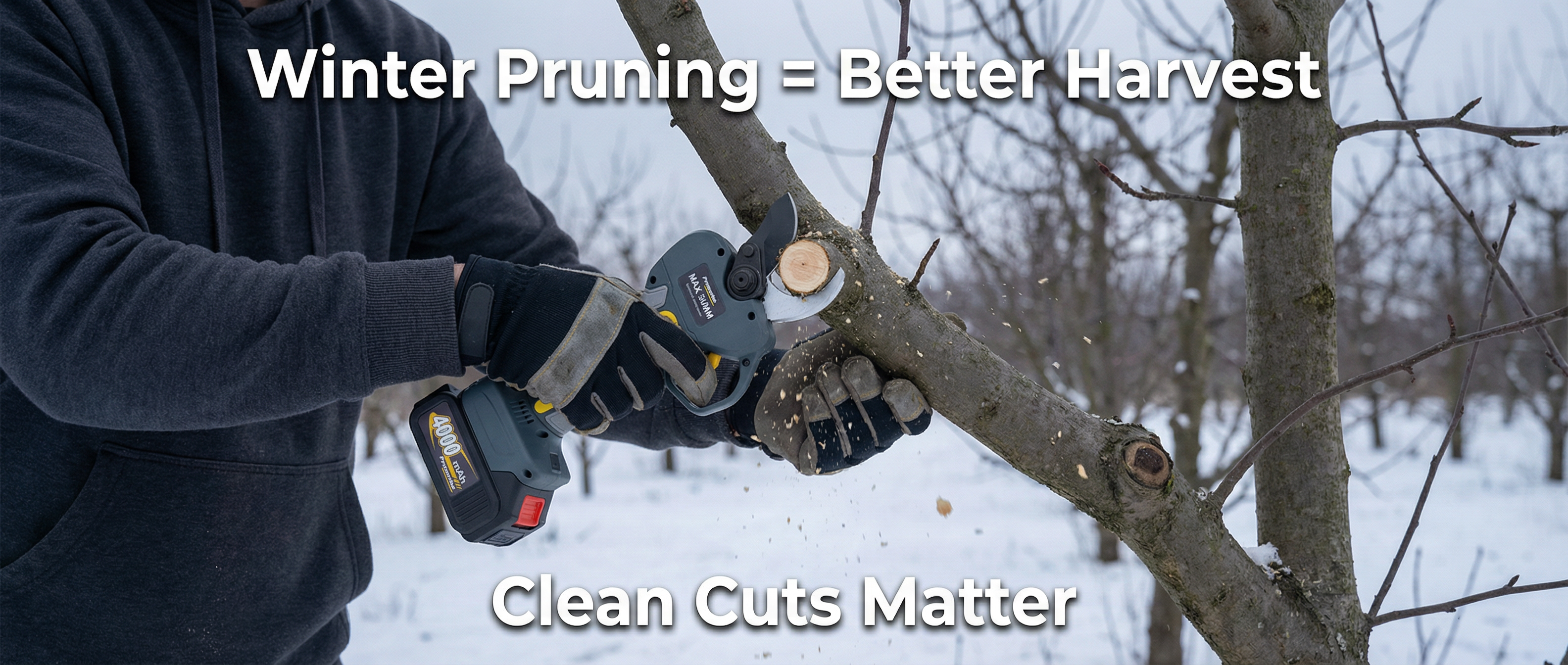
Winter is the quiet season in the orchard — but it’s also the most important time to prune fruit trees. With leaves gone and sap flow slowed, you gain a clear view of the tree’s internal structure.
A well-executed winter prune improves:
🍏 Spring flowering
🌳 Branch spacing
🍑 Fruit size
💪 Tree longevity
This guide explains what to prune, how to make proper cuts, and the tool choices professionals rely on during the dormant season.
❄Why Winter Is the Best Time to Prune
Winter pruning benefits fruit trees by:
Allowing easy visibility of structural branches
Reducing disease pressure from open cuts
Encouraging strong new fruiting wood
Improving airflow for next season
Winter pruning = Summer harvest.
✂What to Remove (Dormant-Season Priorities)
1️⃣ Dead, diseased, or broken branches
These are infection hotspots.
2️⃣ Crossing and rubbing limbs
They injure bark and weaken scaffolds.
3️⃣ Water sprouts (vertical shoots)
These steal energy and create shading.
4️⃣ Crowded interior wood
Open the canopy so sunlight can reach fruit.
⚠️ What NOT to Prune in Winter
Peaches (best pruned late winter)
Spring-flowering ornamentals
Trees stressed by drought this year
Dormancy is key — prune too early and you risk dehydration or dieback.
🔧 Pro Orchard Insight (Natural Soft Promotion)
Fruit trees develop extremely dense hardwood, especially older apple, pear, and apricot varieties. Making clean cuts is critical — ragged wounds heal slowly and increase the chance of canker infection.
This is why many orchard growers use high-torque electric pruning shears for branches up to 30–50 mm. The consistent cutting power reduces fatigue during long pruning days, especially when clearing interior wood.
For thicker limbs, a lightweight 8-inch electric pruning saw offers better control than a bulky chainsaw, particularly in tight crotches or when shaping scaffolds. Brushless motors and SK5 blades deliver smoother cuts, improving healing and minimizing bark tear.
🌳 How to Prune Fruit Trees Properly
🍏 Apples & Pears
Prioritize structure
Remove inward-growing shoots
Maintain a central leader or open-center form
🍑 Stone Fruit
Encourage outward growth
Thin interior shoots heavily
🍒 Cherries & Plums
Cut lightly — avoid over-opening the canopy
🍇 Grapevines (Winter Cane Pruning)
Remove all but 1–2 canes
Select strongest buds for next year’s fruit
🔪 Cutting Techniques for Better Healing
Cut just above the branch collar
Avoid stump cuts (they rot)
Angle cuts slightly to shed water
Use clean, sharp tools to prevent disease
Clean wound = Fast recovery.
🌱 Winter Aftercare
After pruning:
Apply compost or organic fertilizer
Mulch around the dripline
Protect young trunks from sunscald
Deep-water before freeze if soil is dry
Healthy winter prep = vigorous spring buds.
💬 Final Thought
Winter fruit tree pruning is one of the most rewarding seasonal tasks. With clarity, patience, and tools designed for clean, controlled cuts, you set your orchard — whether backyard or small farm — up for a productive, resilient spring.
Good pruning today means sweeter harvests tomorrow. 🍎✨