
.png?w=1536&h=539)
Why Pruning Matters
Many people wait until a branch breaks or a tree looks unhealthy before reaching for their pruning shears.
In reality, pruning is preventive care, not just a solution to existing problems.
Proper pruning can:
- Encourage healthy new growth
- Improve airflow and sunlight penetration
- Reduce the risk of disease
- Prevent damaged or weak branches from becoming hazards
- Improve fruit production on many fruit trees
The challenge is knowing when your tree actually needs pruning.
Here are seven common signs to watch for.
1. Dead or Dying Branches
Dead branches are one of the easiest signs to identify.
They often:
- Have no leaves during the growing season
- Appear dry or brittle
- Show cracked or peeling bark
- Break easily
Leaving dead branches on a tree can increase the risk of falling limbs and create entry points for pests and diseases.
Removing them promptly helps the tree focus its energy on healthy growth.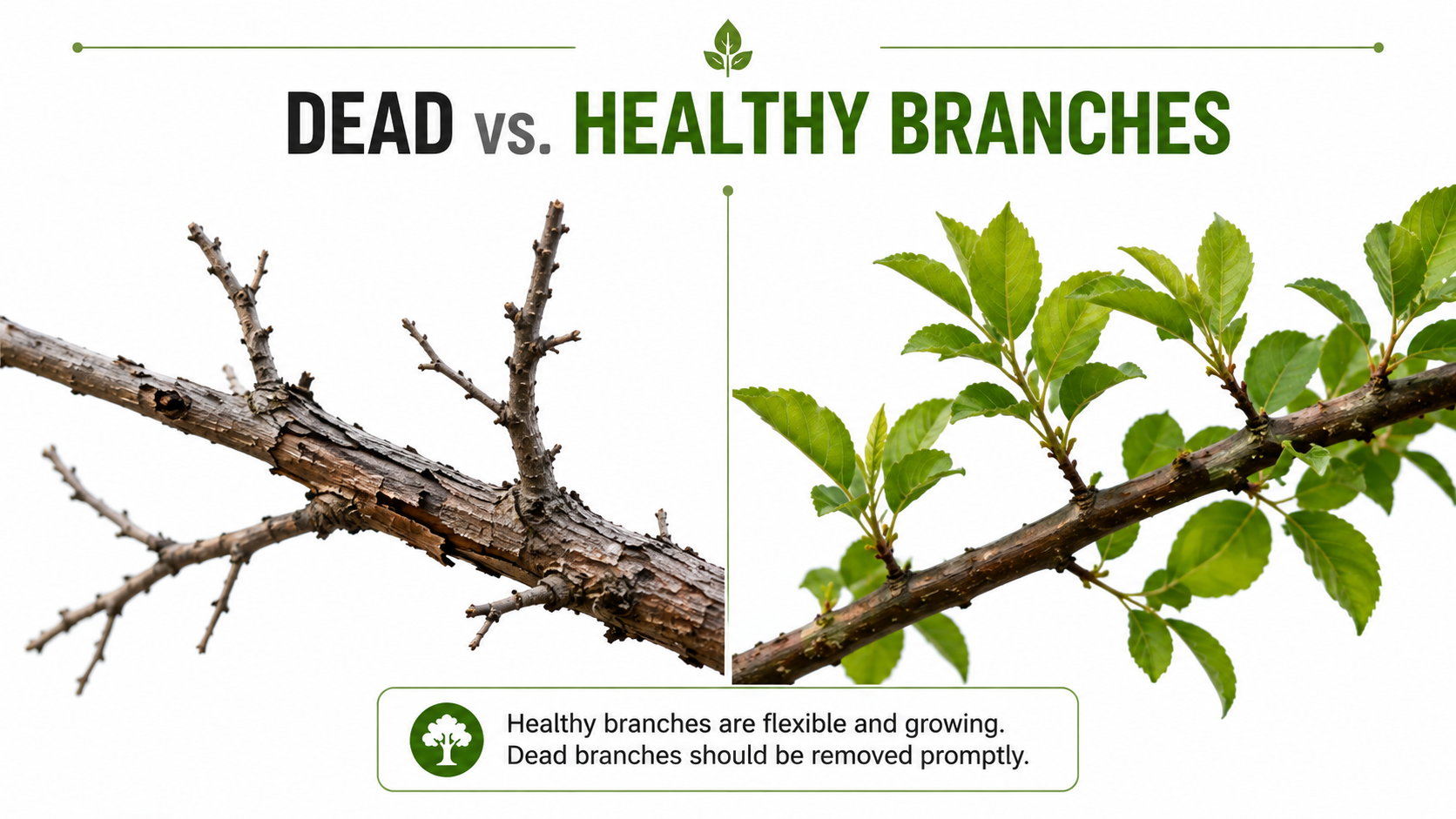
2. Branches That Cross or Rub Together
When branches grow across each other, they create constant friction.
Over time, this rubbing can:
- Damage the bark
- Create wounds
- Increase the chance of fungal infections and insect damage
Removing one of the crossing branches improves the tree's structure and reduces unnecessary stress.
3. The Canopy Is Too Dense
A thick canopy may look healthy from the outside, but it can actually limit the tree's growth.
Dense branches reduce:
- Sunlight reaching the inner canopy
- Air circulation
- Overall tree health
Poor airflow also creates a more favorable environment for fungal diseases.
Selective pruning helps open the canopy while maintaining the tree's natural shape.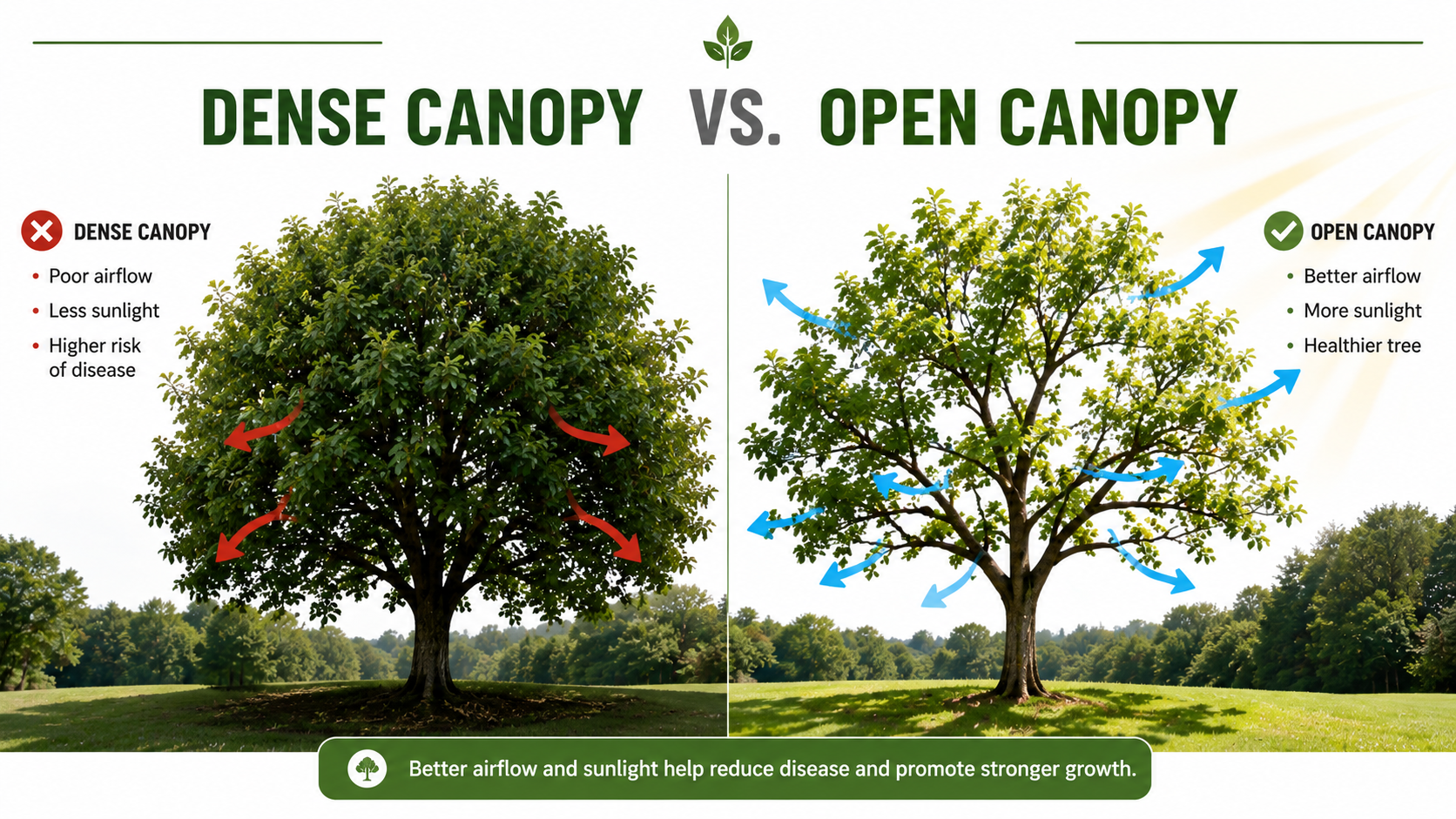
4. Water Sprouts or Suckers Are Growing
Water sprouts are fast-growing vertical shoots that usually appear after heavy pruning or tree stress.
Root suckers grow from the base of the tree.
Although they grow quickly, they often produce weak wood and consume valuable energy.
Removing these shoots allows the tree to direct nutrients toward stronger, healthier branches.
5. Broken or Storm-Damaged Branches
Strong winds, heavy rain, or snow can leave branches partially broken.
Even if a damaged branch is still attached, it may continue to split over time.
Pruning damaged limbs with clean cuts helps the tree recover more efficiently and reduces future safety risks.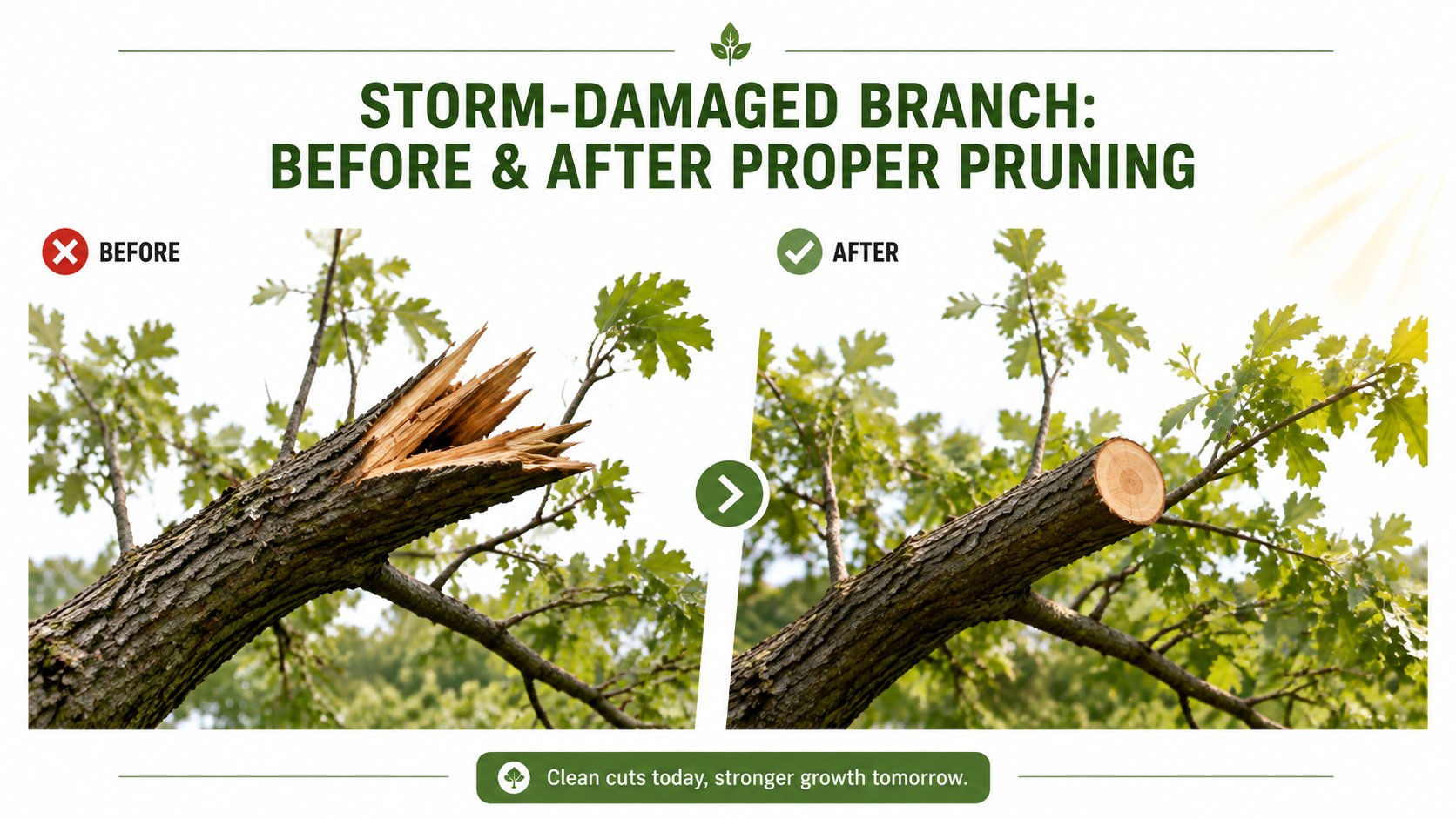
6. Your Tree Produces Less Fruit Than Before
For many fruit trees, declining fruit production can be linked to overcrowded branches.
Too many branches compete for:
- Sunlight
- Water
- Nutrients
Regular pruning helps balance vegetative growth with fruit production.
Apple, pear, peach, and many other fruit trees often benefit from annual pruning to maintain productivity.
7. You Haven't Pruned It in Years
Sometimes the biggest warning sign is simply time.
If a tree hasn't been pruned for several years, it may have:
- Dead wood
- Weak branch structure
- Overcrowded growth
- Reduced airflow
Instead of making large cuts all at once, prune gradually over multiple seasons to avoid placing unnecessary stress on the tree.
As a general guideline, avoid removing more than 25% of a mature tree's canopy in a single year, unless directed by a certified arborist for specific tree health or safety reasons.
Common Pruning Mistakes to Avoid
Even when pruning is necessary, poor technique can do more harm than good.
Avoid these common mistakes:
- Pruning at the wrong time of year
- Using dull or dirty blades
- Leaving branch stubs
- Cutting too close to the trunk
- Removing too much growth in one season
Making clean, precise cuts helps trees heal faster and reduces the risk of disease.
Choosing the Right Tool Makes a Difference
Good pruning isn't just about knowing when to prune—it's also about using the right tool.
For smaller branches, a quality pruning shear provides better control and cleaner cuts.
For thicker branches, a compact cordless chainsaw can improve both efficiency and safety.
Prunarbo offers cordless pruning solutions for a variety of applications:
Whether you're maintaining a backyard tree or managing an orchard, choosing the right tool helps make every cut cleaner, safer, and more efficient.
Frequently Asked Questions
Should I prune a healthy-looking tree?
Yes. Pruning isn't only about removing damaged branches. Regular maintenance pruning helps improve structure, airflow, and long-term tree health.
Can pruning improve fruit production?
For many fruit trees, yes. Proper pruning allows more sunlight into the canopy and helps the tree direct energy toward fruit production rather than excessive vegetative growth.
What's the best season to prune trees?
It depends on the tree species. Many deciduous trees are commonly pruned during dormancy, while some flowering trees are best pruned after blooming. Always consider the specific requirements of your tree.
How do I know if my pruning tools need sharpening?
If cutting requires extra force or leaves crushed or ragged branch surfaces instead of smooth cuts, it's usually time to sharpen or replace the blade.
Final Thoughts
Trees rarely tell us directly that they need attention—but they do leave clues.
Dead branches, crowded canopies, storm damage, and declining fruit production are all signs that it may be time to prune.
By recognizing these warning signs early and making clean, well-planned cuts, you can help your trees stay healthier, stronger, and more productive for years to come.
Ready for Your Next Pruning Job?
Whether you're caring for a single backyard tree or managing an entire orchard, the right tools can make pruning easier and more precise.
Prunarbo's cordless pruning tools combine brushless motor technology, SK5 high-carbon steel blades, and advanced lithium battery systems to deliver clean cuts with less effort.
Explore the Prunarbo collection and find the right cordless pruning tool for your next project.