
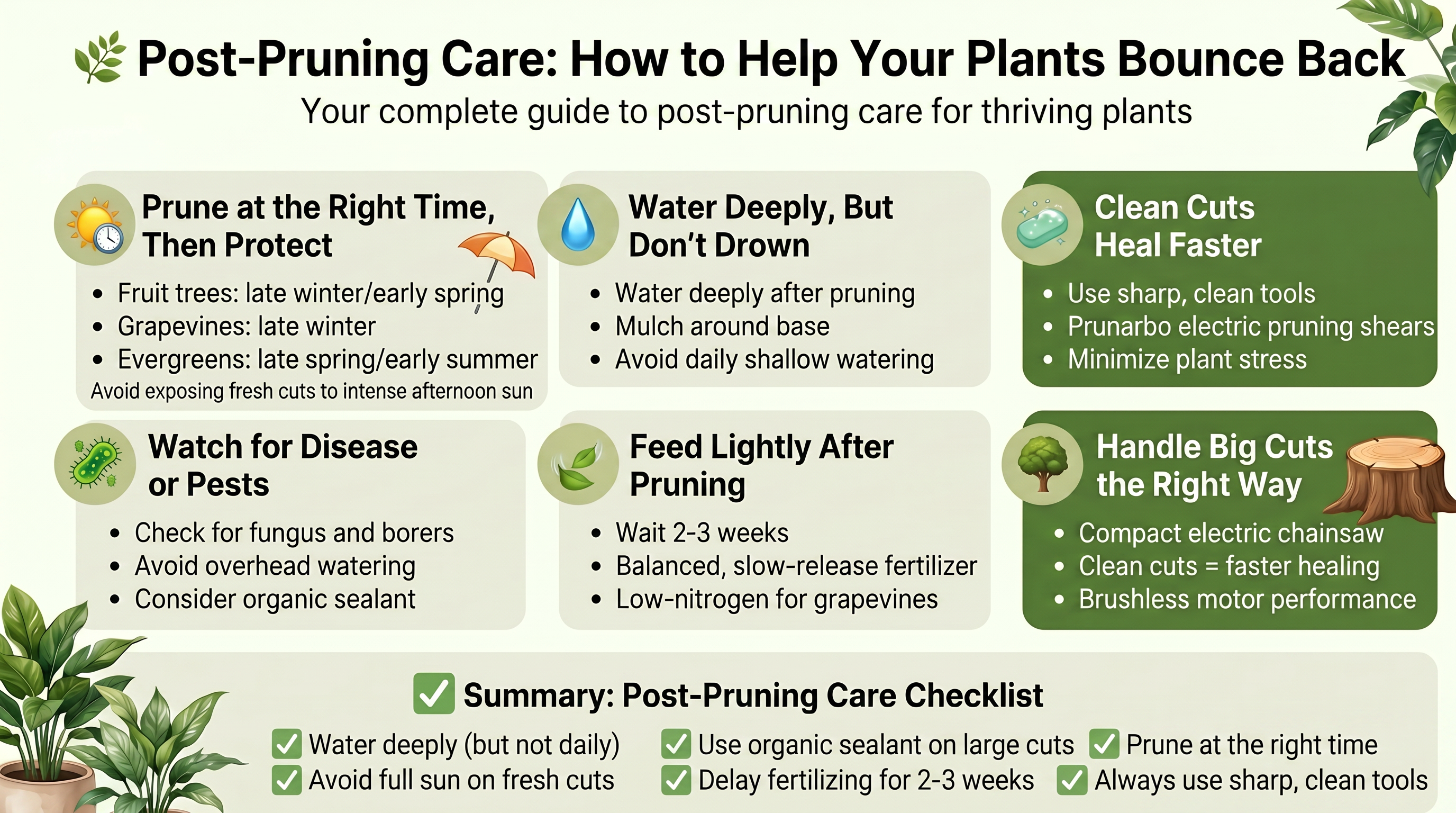
Pruning is just the first step. To keep your plants thriving, post-pruning care is essential. Whether you're trimming fruit trees in Washington, shaping hedges in the UK, or cutting back grapevines in California, the right follow-up steps can make the difference between healthy regrowth and plant stress.
Here’s your go-to guide for helping your plants recover after pruning—plus a few expert tools to make the job smoother.
---
🌞 1. Prune at the Right Time, Then Protect
Timing is everything. After pruning, your plant’s wounds are vulnerable to pests, disease, and sunburn.
Fruit trees like apple, plum, or pear should be pruned during dormancy (late winter or early spring)
Grapevines do best when pruned in late winter
Evergreens like boxwood or yew should be pruned in late spring or early summer
👉 Pro tip: After pruning, avoid exposing open cuts to intense afternoon sun—some gardeners in dry zones use shade cloth to reduce stress.
---
💧 2. Water Deeply, But Don't Drown
Pruned plants need hydration to kickstart regrowth—but too much water can cause root rot.
Water deeply right after pruning, especially for shrubs and fruit trees
Avoid daily shallow watering
Mulch around the base to help retain moisture (but keep mulch away from the trunk to prevent rot)
---
🧼 3. Clean Cuts Heal Faster
Ragged, torn branches make plants more vulnerable to infection. That’s why **using the right tool matters.
💡 Prunarbo’s electric pruning shears offer:
Clean, smooth cuts up to 50mm
Adjustable blade opening for different branch sizes
A progressive trigger for maximum control
This minimizes plant stress and speeds up healing.
---
🦠 4. Watch for Disease or Pests
New cuts are entry points for problems. For the first 2–3 weeks post-pruning:
Check regularly for signs of fungus, borers, or sap leakage
Avoid overhead watering (which can spread spores)
Consider applying organic sealant on large cuts, especially on stone fruit trees like cherries or apricots
---
🍃 5. Feed Lightly After Pruning
Don’t over-fertilize immediately after pruning—plants need time to recover.
Wait 2–3 weeks, then apply a balanced, slow-release fertilizer
For grapevines, use a low-nitrogen mix to encourage fruit, not just foliage
For hedges or boxwood, a spring feed works well to boost lush new growth
---
🌳 6. Handle Big Cuts the Right Way
Removing thick limbs? That’s a big wound to your plant.
Use a compact electric chainsaw—like the Prunarbo 8-inch cordless model:
Cuts cleanly through tough wood
Brushless motor = smoother, more efficient performance
Works with extension poles for hard-to-reach branches
Clean cuts = faster healing and less disease risk.
---
✅ Summary: Post-Pruning Care Checklist
✅ Water deeply (but not daily)
✅ Avoid full sun on fresh cuts
✅ Keep an eye on pests/disease
✅ Delay fertilizing for 2–3 weeks
✅ Always use sharp, clean tools for smooth cuts
---
🌼 Final Thought
Remember—pruning isn’t just about removing the old. It’s about setting your plant up for stronger, healthier growth. With the right post-care steps (and the right tools), your garden will bounce back better than ever.
👉 Looking for pro-level results? Tools like Prunarbo’s electric pruners and compact chainsaws make clean, precise work easier—and your plants will thank you for it. 🌱